Strategies & Risk
How to Trade Digit Match on Deriv with BinaryBots
Learn how to trade digit match on deriv using the BinaryBot.live automated platform. Follow this step-by-step setup guide to build your strategy.
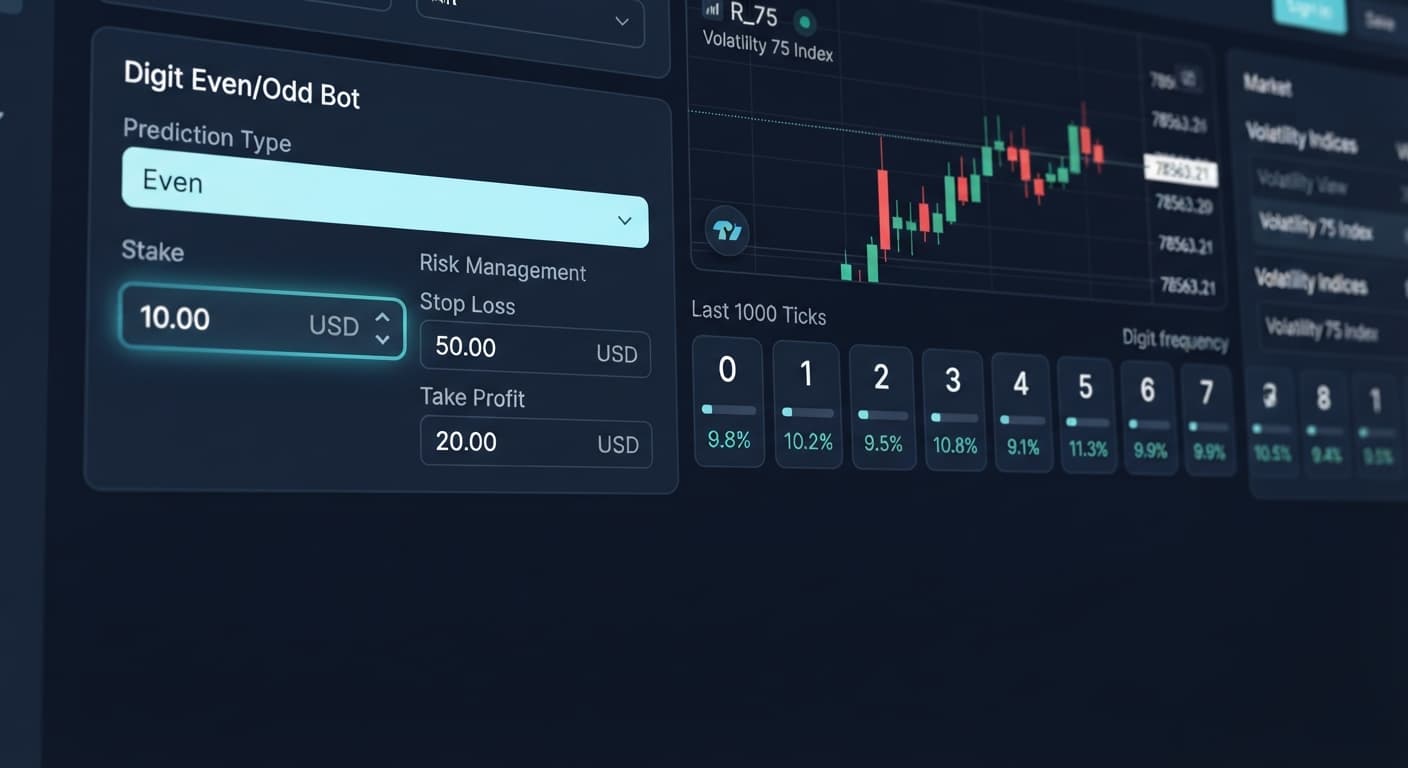
To understand how to trade even odd on deriv, you select DIGITEVEN or DIGITODD contracts and configure an automated tool to execute trades based on incoming tick digits. The payout sits near 95% on wins, while losses forfeit the entire stake. You can execute this strategy automatically by setting up the Solid Trading Bot with an alternating trigger, clear stop loss, and max ladder level parameters.
Most new traders fall into the gambler's fallacy when setting up binary bots for digit trading. They watch three odd digits print in a row on Volatility 100 Index and assume an even digit becomes statistically "due." Deriv synthetic indices generated by cryptographic algorithms produce independent outcomes on every tick. The probability of an even digit on tick four remains identical to tick one—roughly 50%, minus the broker's built-in statistical edge.
Believing a past digit sequence forces the next result leads directly to uncontrolled stake doubling. When traders execute manual trades or run mismanaged deriv bots without clear limits, long single-side runs clean out account balances fast. An automated strategy must rely on defined risk parameters rather than the false hope that random numbers owe you a reversal.
If you trade DIGITEVEN continuously during an extended streak of odd digits, your stake progression escalates exponentially. Switching targets sequentially or using defined rule sets doesn't alter the underlying tick probabilities, but it prevents you from blindly fighting a persistent trend on a single digit type.
To build a disciplined system, you route order flow through automated tools that handle trade conditions without emotion. Instead of sticking strictly to DIGITEVEN or DIGITODD continuously, an alternating setup flips the contract type after a trade settles. If your bot places a DIGITEVEN trade and loses, the next contract switches to DIGITODD.
When learning how to trade even odd on deriv effectively, your money management selections dictate whether your account survives a bad run. You can select parameters like Fixed Stake, Martingale, Anti-Martingale, Fibonacci, D'Alembert, % of Balance, or Mesamilano. Martingale recovers losses quickly during short losing sequences, but it requires strict boundary controls to stop it from wiping out your balance.
You must configure three primary protection settings before launching a session:
| Setting Name | Recommended Value | Operational Purpose |
|---|---|---|
| Contract Strategy | DIGITEVEN / DIGITODD | Rotates order execution between even and odd digits |
| Money Management | Martingale | Multiplies stake after a loss to recover net drawdown |
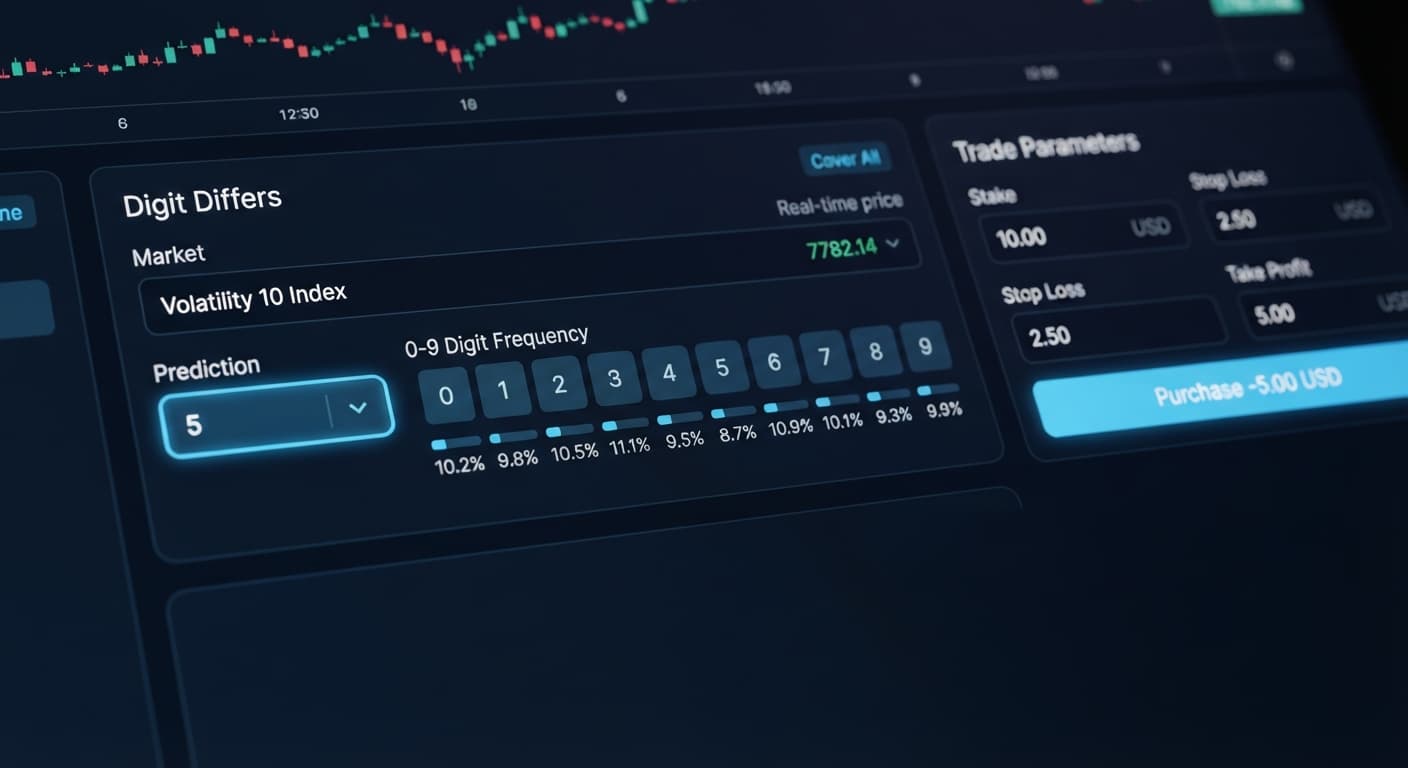
| Base Stake | $2.00 | Establishes starting contract value |
| Target Profit | $10.00 | Reaches session goal and shuts down execution |
| Stop Loss | $30.00 | Hard balance protection ceiling |
| Max Ladder Level | 3 | Caps stake multipliers at three consecutive steps |
Open the browser application and enter your personal Deriv API token into the token input field. The software connects directly to Deriv over their official API, meaning your login credentials and capital stay securely inside your Deriv account.
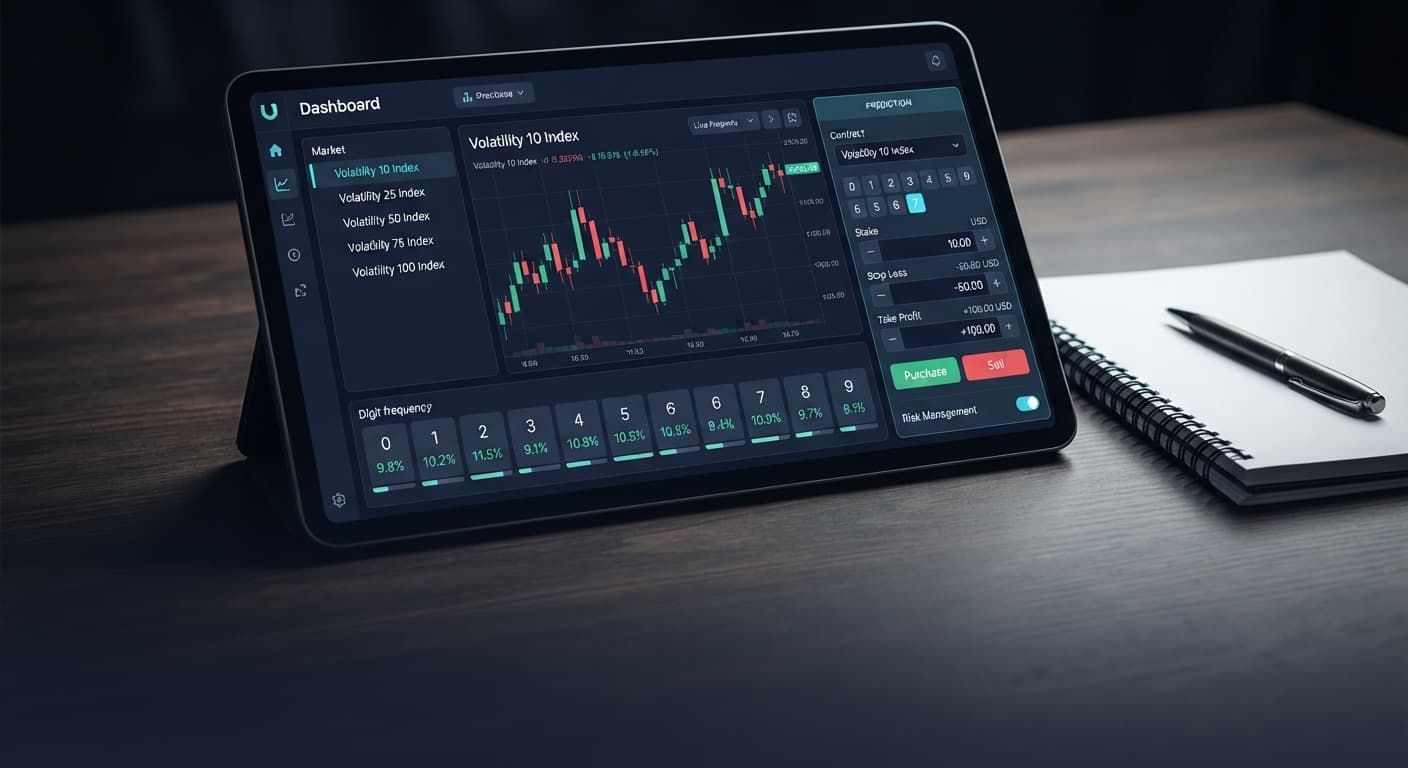
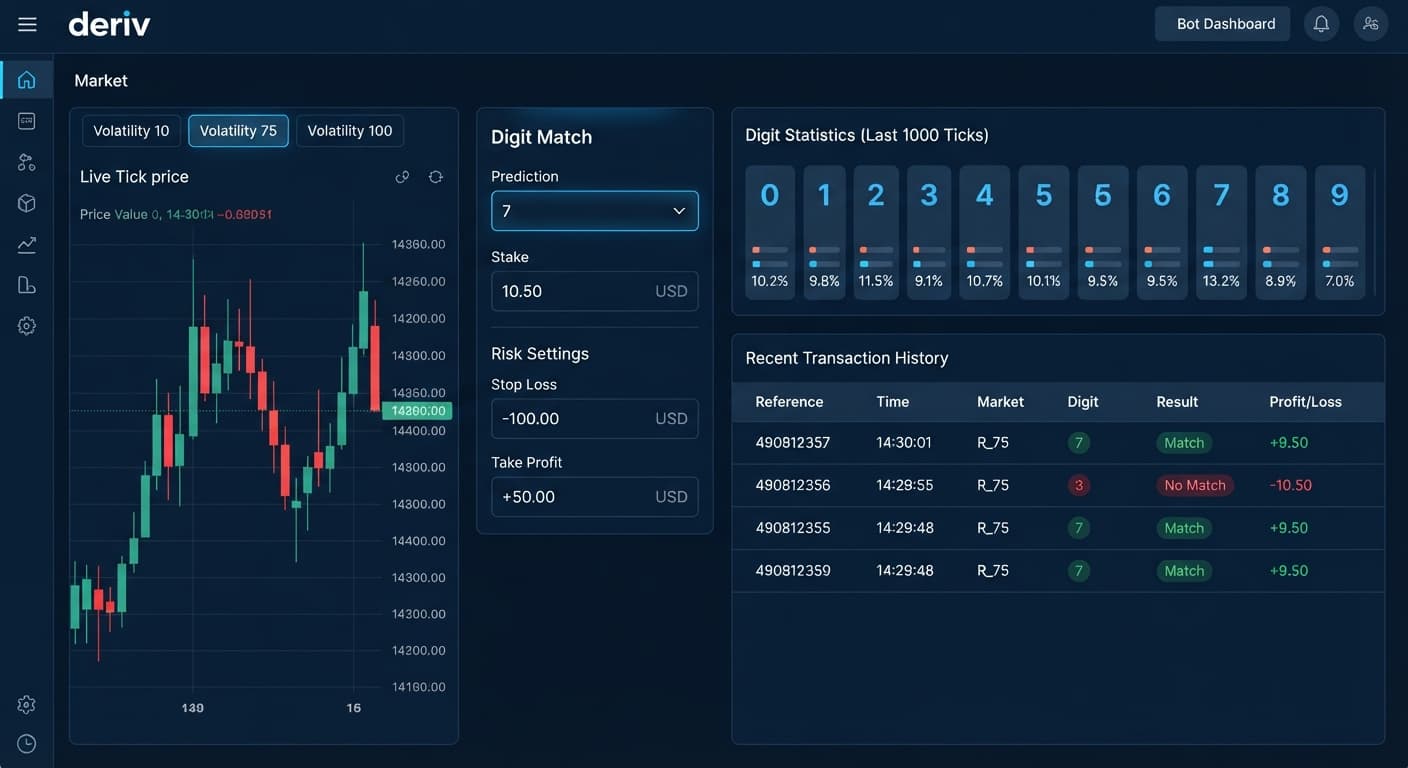
Select your market from the available volatility indices, such as Volatility 75 Index or Volatility 100 Index. Higher volatility indices process ticks faster, giving you more trading signals per minute. If you want a slower pace to monitor execution, choose Volatility 10 Index.
Select DIGITEVEN as your initial purchase type, then toggle the target execution behavior to alternate contract types after every settled trade. This ensures the bot switches to DIGITODD on trade two, back to DIGITEVEN on trade three, and continues rotating automatically.
Select Martingale under the money management menu. Enter your initial base stake ($2.00), set your stop loss ($30.00), and define your target profit ($10.00). Set the max ladder level to 3. Capping the ladder level guarantees the stake resets back to $2.00 even if you hit four consecutive losses, preventing runaway multiplier chains. You can access these inputs across the free bot library on the site.
Before running real money, switch your account dropdown to your Deriv demo profile. Hit the run button and let the script execute 20 to 30 trades. Watch how the log tracks contract purchases, handles losses, and enforces your max ladder level limit when a loss streak hits.
To understand the financial reality of running automated binary bots on digit contracts, examine what happens to your balance during an adverse run.
Assume you start with a $100.00 balance on Volatility 75 Index using a $2.00 base stake and standard Martingale (2x multiplier). Your take profit / target profit sits at $10.00, your stop loss is set at $65.00, and your max ladder level is set to 4.
Here is the exact progression across five consecutive losing ticks:
At this point, you've lost five straight trades. Your total drawdown sits at $62.00, leaving $38.00 in your account balance.
If you had set your max ladder level to 5 instead of 4, the bot would attempt to place Trade 6 with a required stake of $64.00. Because your remaining balance is only $38.00, Deriv rejects the contract due to insufficient funds. The sequence fails, the trade cannot be placed, and your account suffers a 62% drawdown without any chance for the next trade to recover the sequence.
If you had kept your max ladder level capped at 2, your trade stakes would look like this: $2.00 (Loss), $4.00 (Loss), $8.00 (Loss), and then reset back to $2.00 on trade four. Five consecutive losses under a capped ladder level of 2 results in a total drawdown of only $18.00 ($2 + $4 + $8 + $2 + $2), keeping your running balance at $82.00 and leaving plenty of capital to continue operating safely.
An alternating digit strategy is not bulletproof. Understanding how to trade even odd on deriv requires recognizing the market conditions that cause this specific configuration to perform poorly.
Always test your setups thoroughly on virtual funds using a Deriv demo account before committing real dollars. This article provides technical instructions for software configuration and does not constitute financial advice.
Try this automated setup on the free Solid Trading Bot using a virtual balance first.
If you don't have an active account yet, create a free Deriv account to set up your API access.
Trading involves risk. Past performance does not guarantee future results.
Related: Digit Differs Strategy Deriv Bots: Vol 10 Guide
Related: Binary Bots vs Manual Trading: Digit Differs vs Over Under
How the strategies behind the bots actually work — Digit Differs, Over/Under, Even/Odd, Rise/Fall, and the money management that decides whether they survive a losing streak.
Try 9 Strategies on Solid →You select DIGITEVEN or DIGITODD contracts and configure an automated tool to execute trades based on incoming tick digits. The payout sits near 95% on wins, while losses forfeit your entire stake.
You can use the Solid Trading Bot on BinaryBot.live to execute trades automatically. It lets you set up an alternating trigger, clear stop losses, and max ladder level parameters.
Traders often fall for the gambler's fallacy by assuming an even or odd digit is 'due' after a streak. This leads to uncontrolled stake doubling and exponential stake escalation during extended runs.
You need to configure a stop loss for absolute balance protection, a target profit to lock in earnings, and a max ladder level to cap your stake multipliers. For example, the article recommends a $30 stop loss, a $10 target profit, and a max ladder level of 3.
Guides closest to this one.
Learn how to trade digit match on deriv using the BinaryBot.live automated platform. Follow this step-by-step setup guide to build your strategy.
Compare digit differs vs digit match on binary bots. Learn payout odds, probability mechanics, and how to configure strategies on BinaryBot.live today.
Master the digit differs strategy deriv bots on Volatility 10. Learn setup steps, Martingale rules, and risk controls. Read the market guide today.