Digit Analysis
Fix Deriv Digit Pad Not Working on Volatility 10
Is your digit pad not working on Deriv? Fix API token and WebSocket dropouts while monitoring volatility indices with our troubleshooting guide.
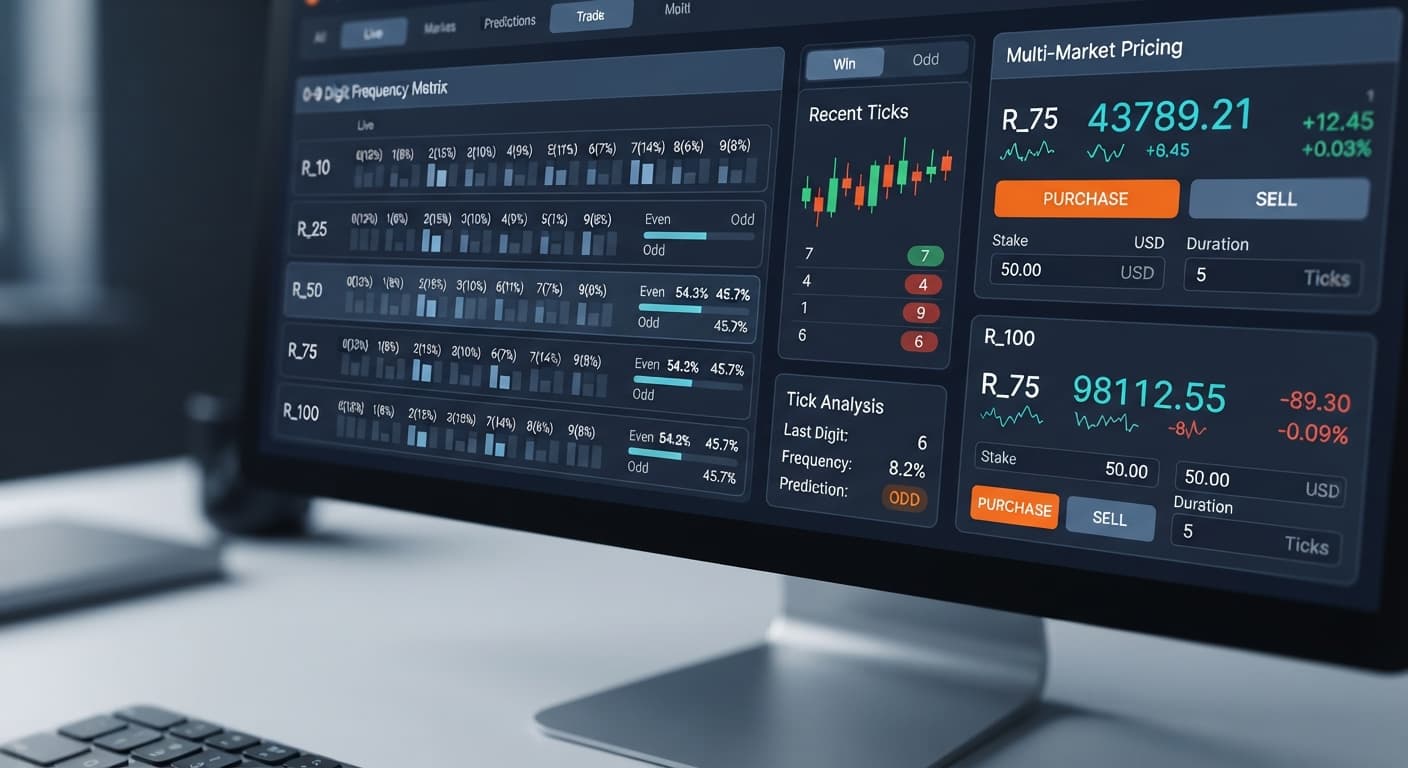
If you're looking for an honest digit pad review, here's the short answer: Digit Pad is a free, manual browser tool that monitors five volatility markets at once so you can execute DIGITDIFF, DIGITEVEN, and DIGITODD trades without flipping between broker charts. It connects directly to Deriv over their official API, meaning your account balance remains on Deriv while you trade. It isn't a hands-off auto bot that places orders on autopilot; it's a real-time signal dashboard that presents live digit statistics side by side for manual execution.
To trade effectively with this tool, you need to understand the underlying Deriv contract mechanics. Digit Pad focuses on three specific contract types: DIGITDIFF, DIGITEVEN, and DIGITODD.
When you purchase a DIGITDIFF contract, you pick a single digit from 0 to 9 as your target. If the last digit of the tick duration ends on any number except your chosen target, you win the payout. The payout is small—typically around 9.9%—because you have a 9-in-10 statistical probability of winning each single-tick draw. However, if that exact digit hits, you lose your entire trade stake.
DIGITEVEN and DIGITODD contracts operate on a 50/50 standard distribution, minus the broker's built-in edge. A DIGITEVEN contract wins if the final tick ends in 0, 2, 4, 6, or 8. A DIGITODD contract wins if it ends in 1, 3, 5, 7, or 9. The payout sits right around 95% to 96% of your trade size.
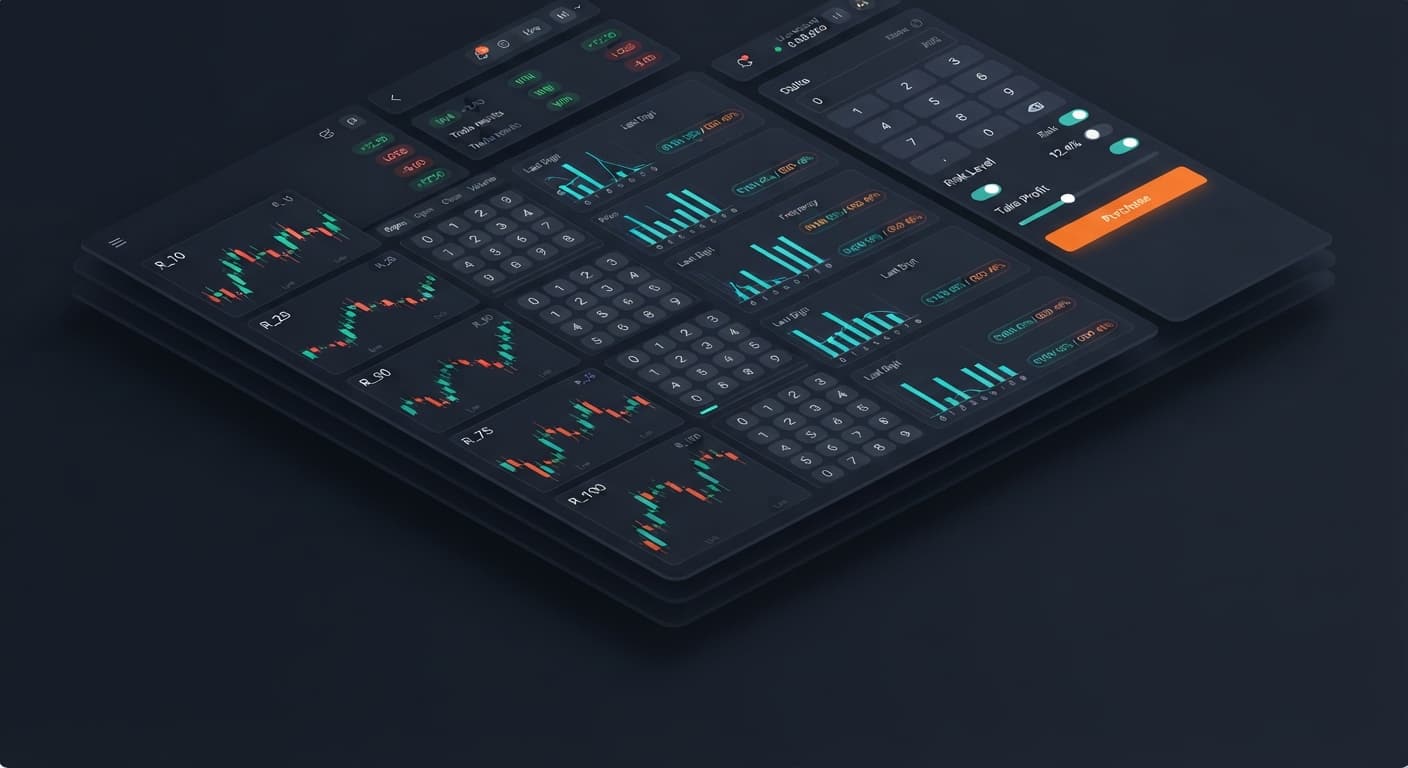
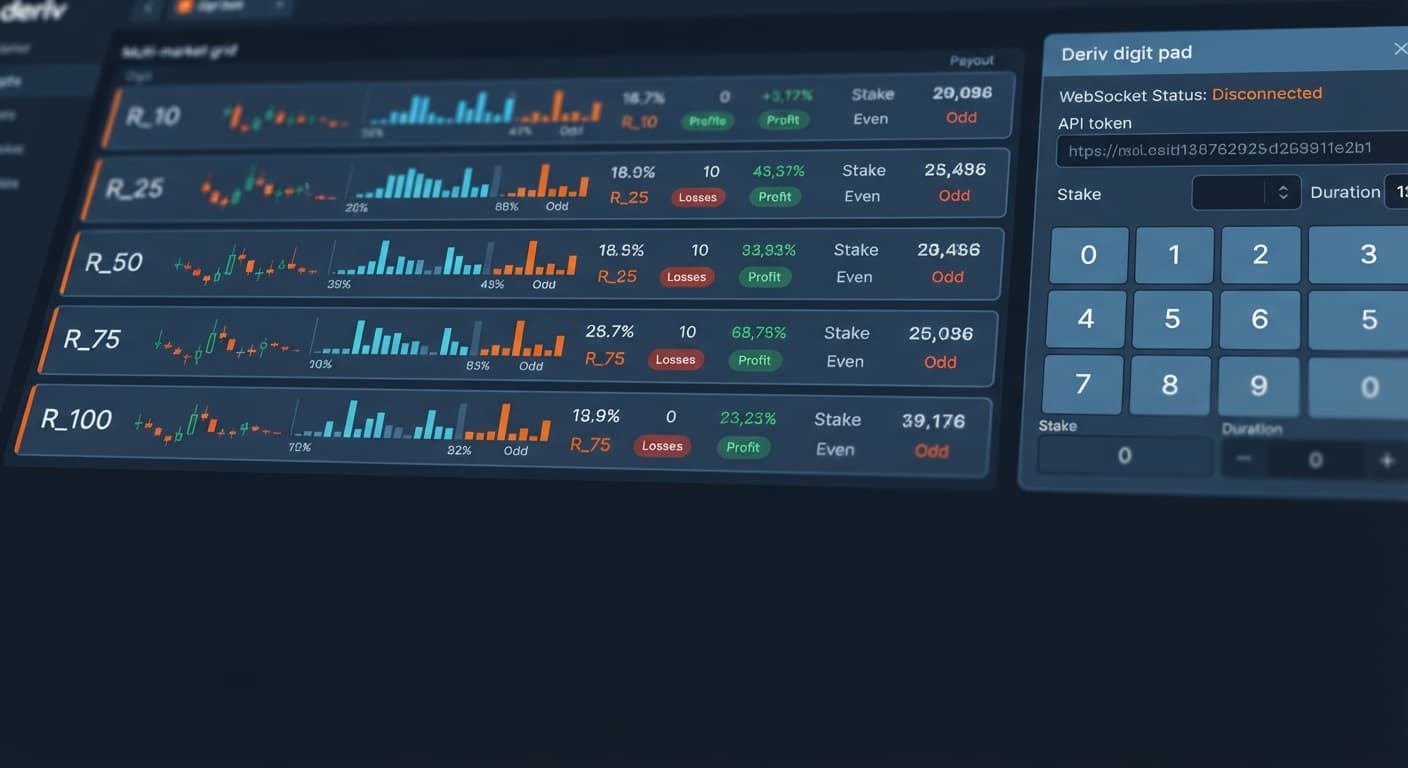
The multi-market digit matrix streams live tick data across five indices simultaneously: R_10, R_25, R_50, R_75, and R_100. It calculates the percentage frequency of each digit over recent ticks. When traders analyze these percentages, they often look for digits that have cold streaks (appearing far below their expected 10% baseline) or hot streaks.
It's vital to remember one rule above all else: past digit frequency does not change the probability of the next tick. Deriv synthetic indices rely on cryptographic random number generation. Every tick is an independent draw. A digit that hasn't appeared in 30 ticks still has the exact same 10% chance of appearing on tick 31 as it did on tick 1.
While the mathematical probability of a single digit remains identical across all synthetic markets, the tick characteristics and execution feel differ wildly depending on which index you select. Choosing the wrong market for your manual execution style will quickly drain your focus.
Here is how the five supported markets compare across core operational metrics:
| Volatility Index | Tick Interval | Price Variance Per Tick | DIGITDIFF Execution Profile | Mental Load & Reaction Window |
|---|---|---|---|---|
R_10 |
1 Second | Very Low | Slow, steady tick pacing. Ideal for deliberate manual entries. | Low; gives you ample time to check stats before clicking. |
R_25 |
1 Second | Low-Moderate | Consistent tick flow with mild price swings. | Moderate; easy to maintain focus over a 30-minute session. |
R_50 |
1 Second | Moderate | Balanced tick movement. Standard baseline for stats testing. | Moderate; standard pacing for multi-market scanning. |
R_75 |
1 Second | High | Aggressive price moves. Ticks feel visually faster on chart displays. | High; requires quick decision-making between signals. |
R_100 |
1 Second | Extreme | Sharp price jumps. High visual noise on stats panels. | Very High; fatiguing if you run multi-market comparisons for long. |
If you plan to run a DIGITDIFF setup, R_10 or R_25 is usually the superior choice. Because all Deriv synthetic indices generate ticks every second, the lower-volatility indices don't give you a mathematical edge, but they do reduce visual clutter and emotional fatigue. When you monitor five markets simultaneously on the multi-market digit matrix, trading on R_100 often leads to rushed misclicks because the extreme price swings create an artificial sense of urgency. Lower volatility markets give you a cleaner environment to process statistical changes calmly.
Unlike hands-off automated scripts found elsewhere in the free library of deriv bots, Digit Pad puts every entry trigger directly in your hands. Here is the exact walkthrough to configure your session correctly.
Open the tool in your browser and enter your Deriv API token into the authentication field. This establishes a direct socket connection to your account. Your login credentials and account funds are never stored on BinaryBot.live. Always start this process on a virtual demo account.
Select whether you want to execute Digit Differs or Even/Odd contracts. Choosing your mode updates the trade pad buttons and configures the live matrix panels to display relevant statistical percentages for that contract type.
Use the market selection dropdown to set your primary target market among R_10, R_25, R_50, R_75, or R_100. While the matrix displays live stats for all five markets side by side, your active order button will execute contracts on the specific market selected here.
Enter your preferred trade amount into the stake control. If you are running Digit Differs mode, set your prediction value inside the digit target field (choosing any number from 0 to 9). For Even/Odd mode, your buttons will directly select DIGITEVEN or DIGITODD.
Watch the live digit matrix. When you identify a statistical distribution that fits your manual entry criteria—such as a digit on R_10 reaching an unusually high spike on recent ticks—click the purchase button. The order executes instantly on Deriv's servers.
+-----------------------------------------------------------------------+
|                         DIGIT PAD DASHBOARD                           |
+-----------------------------------------------------------------------+
|  [ API Token Connected: Demo Account ]                                |
|                                                                       |
|  Controls:                                                            |
|  - market selection : [ R_10   v ]                                    |
|  - stake            : [ $1.00   ]                                    |
|  - digit target     : [ 7       ]                                    |
|                                                                       |
|  Multi-Market Digit Matrix (Live Stats):                              |
|  Index  | Digit 0 | Digit 1 | ... | Digit 7 (Target) | Digit 9        |
|  -------------------------------------------------------------        |
|  R_10   |   10%   |    8%   | ... |    22% (HOT)     |   11%          |
|  R_25   |    9%   |   11%   | ... |     5% (COLD)    |   10%          |
|  R_50   |   12%   |   10%   | ... |    10%           |    9%          |
|  R_75   |    7%   |   14%   | ... |    11%           |    8%          |
|  R_100  |   11%   |    9%   | ... |     9%           |   12%          |
|                                                                       |
|  [ BUY DIGITDIFF ]     [ BUY DIGITEVEN ]     [ BUY DIGITODD ]         |
+-----------------------------------------------------------------------+
If you've used automated binary bots before, transition to a manual pad requires a mindset shift. The most common point of failure isn't the interface—it's human psychology combined with probability misinterpretations.
First, traders fall into the gambler's fallacy. You might see digit 4 hit three times in a row on R_50 and decide to drop a DIGITDIFF trade on digit 4, assuming it can't possibly hit a fourth time. Because synthetic index ticks are completely independent random draws, digit 4 has the exact same 10% chance on the fourth tick as any other number. Believing a digit is "due" to stop appearing is the fastest way to suffer back-to-back losses on a DIGITDIFF contract.
Second, manual execution latency creates execution mismatches. When you trade on a 1-tick duration, the difference between clicking at the start of a tick cycle versus the end can push your entry into the following tick. If you jump between markets quickly on the dashboard without letting your eyes settle on the live tick stream, you'll end up placing trades based on stale statistical snapshots.
Finally, because Digit Pad does not include auto-automation features or automated stake-multiplier algorithms, recovery is entirely manual. Trying to manually double your trade size after a loss to chase back drawdowns frequently leads to panicked entries and wiped bankrolls.
Because Digit Pad is a manual trade execution panel rather than an automated script, it gives you complete control over every order. However, having total control means you must enforce your own operational boundaries before opening the dashboard.
stake size to 1% or 2% of your total account balance per trade. On a $500 account, that means risking $5 to $10 per contract entry.market selection, stake, and digit target controls fluidly without making input errors.If you want to read another comprehensive digit pad review or test out different tool configurations across synthetic indices, getting hands-on experience in a risk-free environment is always your best starting point.
Try it yourself on Digit Pad using a demo balance first. If you don't have one yet, create a free Deriv account. Trading involves risk. Past performance does not guarantee future results.
Related: Digit Pad vs Manual Trading: Binary Bots Compared
Free multi-market digit trading tool for Deriv — trade Digit Differs and Even/Odd across all volatility indices simultaneously with real-time signals for R_10, R_25, R_50, R_75 and R_100.
Open Digit Pad →No, Digit Pad isn't a hands-off auto bot that places orders on autopilot. It's actually a real-time signal dashboard that monitors five markets at once so you can manually execute your trades.
Digit Pad connects directly to Deriv over their official API, which means your account balance stays safely on Deriv while you trade. It's a free, manual browser tool rather than a separate wallet or broker.
Digit Pad streams live tick data across five volatility indices simultaneously: R_10, R_25, R_50, R_75, and R_100. Each of these markets has a 1-second tick interval, though their price variance and mental load differ quite a bit.
You typically get a small payout of around 9.9% when trading DIGITDIFF. You get this return because you have a 9-in-10 statistical probability of winning each single-tick draw, though hitting your exact target digit means you lose your entire stake.
Guides closest to this one.
Is your digit pad not working on Deriv? Fix API token and WebSocket dropouts while monitoring volatility indices with our troubleshooting guide.
Compare digit pad vs manual trading on Deriv. Learn how multi-market digit monitoring improves execution over single-market setups. Try it free today.
Master digit pad for beginners with zero prior knowledge. Learn digit analysis, track multiple Deriv volatility indices, and test binary bots today.