
Strategies & Risk
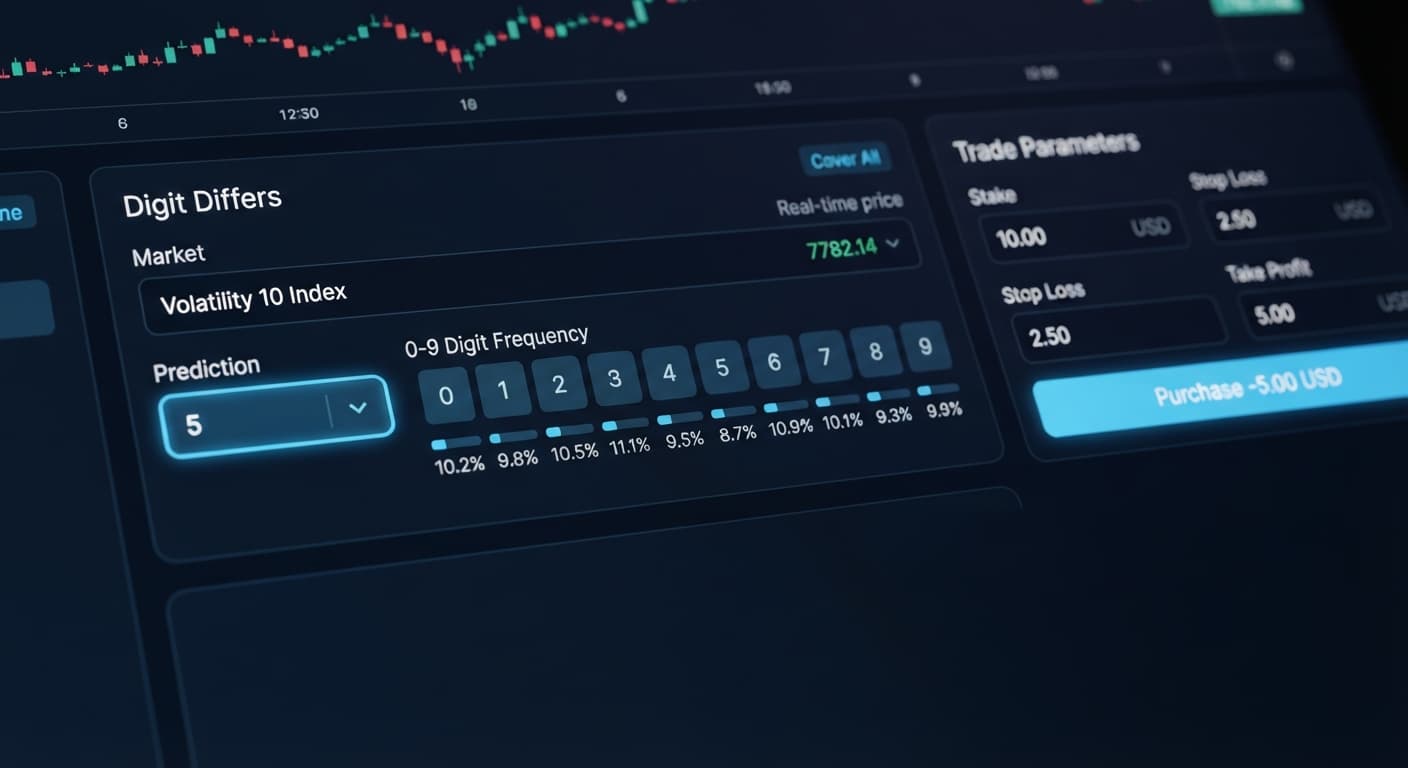
How to Trade Digit Differs on Deriv: Digit Differs Bot
Master how to trade digit differs on deriv with our step-by-step tutorial. Configure the Digit Differs Bot for statistical trading today.
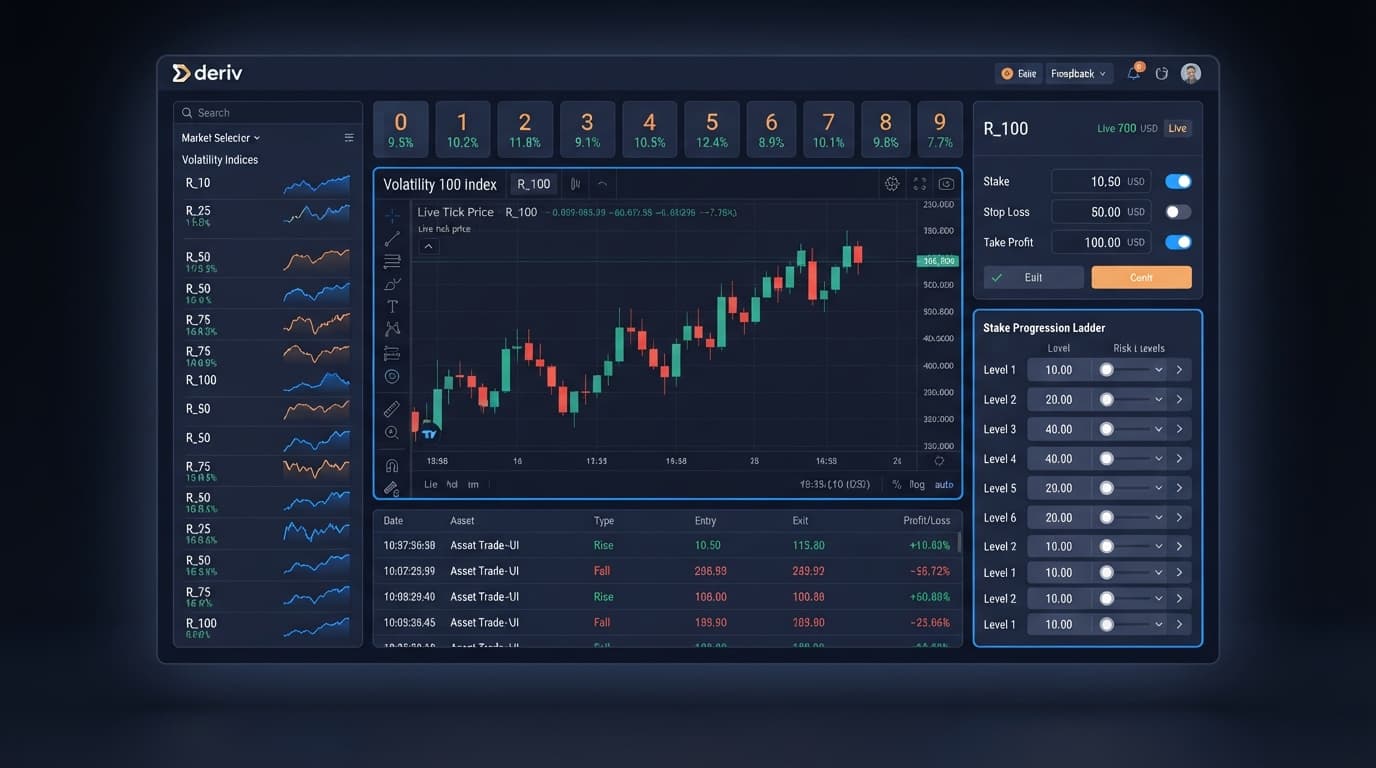
Are deriv bots profitable on Volatility 100 Index? The short answer is yes, but only during short, disciplined sessions backed by tight risk parameters, because mathematical payout edges favor the broker over extended play. Automated bots running aggressive strategies like Martingale can wipe out account balances during unexpected losing streaks if left to run on autopilot.
Volatility 100 Index is Deriv's fastest continuous synthetic asset, moving by one tick every second with wide price gaps. It fits disciplined traders running brief digit or directional sessions who want fast contract resolution. Anyone relying on automated tools to generate passive income without hard drawdown limits will lose their money quickly.
Deriv generates the Volatility 100 Index using a cryptographic random number generator, producing a fresh price point every second, day and night. The "100" label means it reflects 100% of standard baseline volatility, producing much wider tick-to-tick jumps than lower-volatility synthetics like Volatility 10 or Volatility 25.
Every single tick output is completely independent of the last. Past price behavior does not alter future probability. If you see ten straight ticks ending on an even digit, the probability of the next tick being odd remains exactly 50%. A digit odd even bot cannot predict what happens next based on historical patterns because synthetic index tick streams hold zero memory. The continuous 1-second pace provides high trade frequency, but that speed accelerates trading losses when market conditions hit a cold streak.
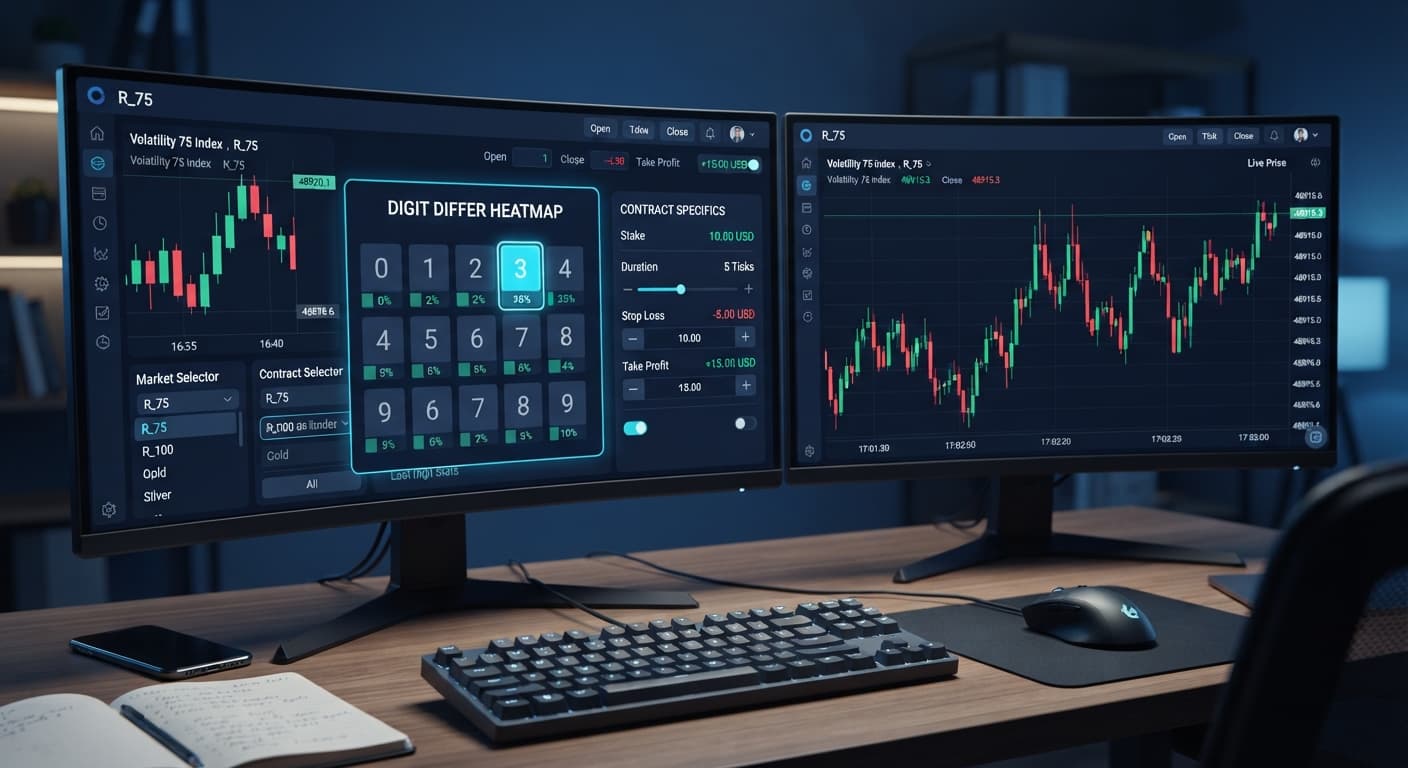
Over a sample size of 10,000 ticks, digits 0 through 9 settle into a uniform distribution where each digit appears roughly 10% of the time. Short windows of 50 to 100 ticks look much different. Local statistical variance creates temporary spikes where digit 3 hits 16% of the time while digit 7 hits only 4%.
Trading digit contracts means managing structural payout imbalances:
If you want to know are deriv bots profitable over the long haul, look closely at house payout margins. Winning consistently demands using money management setups that survive normal statistical clusters without over-exposing your account.
High execution speed on 1-second ticks demands careful stake scaling. You do not want heavy multipliers compounding your risk every second during a bad run.
| Contract Type | Duration | Stake / Setup | Money Management | Reasoning |
|---|---|---|---|---|
| DIGITEVEN / DIGITODD | 1 tick | $1.00 base stake | D'Alembert | Adds fixed units on losses instead of doubling stakes, keeping drawdown linear on 1-second ticks. |
| DIGITDIFF | 1 tick | $10.00 base stake | Fixed Stake | High win probability means a single loss wipes out multiple gains; scaling stakes up makes that risk worse. |
| DIGITOVER (Over 2) | 1 tick | $2.00 base stake | Anti-Martingale | Increases stake after wins to capture brief winning runs without doubling down on losses. |
| Rise/Fall (CALL/PUT) | 5 ticks | $5.00 base stake | Fibonacci | Uses a gentler progression scale on directional trades, smoothing out brief tick noise. |
When configuring deriv bots for Volatility 100 Index, set three compulsory safety parameters before starting execution:
Let's walk through a concrete scenario using real dollar amounts on Volatility 100 Index to see how automated drawdown happens in real time.
Suppose you start with an account balance of $200.00 running a DIGITEVEN contract setup. You choose Martingale money management with a base stake of $2.00, a multiplier of 2.1x, a take profit / target profit target of $10.00, a stop loss set to $50.00, and max ladder level capped at 4.
Traders frequently ask are deriv bots profitable when applied to automated recovery runs. Here is how a four-trade losing streak unfolds tick-by-tick:
Because you set your max ladder level to 4, the bot halts immediately after Trade 4. Your session stops with a total drawdown of $33.54, safely inside your $50.00 stop loss threshold.
Now look at what happens if you leave max ladder level unmapped:
In six seconds, an unmapped run wiped out $154.10, or 77% of your bankroll. The automated strategy didn't fail because the index was rigged; it failed because exponential progression ran out of mathematical space.
Testing your settings on binary bots using virtual funds helps you discover these boundaries before real money is at risk. Always test any new binary trading strategy or digit differs strategy on a Deriv demo account before trading live.
Test these risk limits yourself on the free binary bot platform using a virtual balance first. If you need a testing balance, open a free Deriv account to get started.
Trading involves risk. Past performance does not guarantee future results.
Related: Configuring Sniper Bot V3 Settings for Deriv Bots
Related: Digit Differs vs Digit Match on deriv bots
Related: Step-by-Step Fibonacci Setup on Sniper Bot V3 for Deriv Bots
Related: How to Trade Digit Differs on Deriv: Digit Differs Bot
Related: Safest Deriv Bots Settings: Stop Loss & Take Profit Guide
How the strategies behind the bots actually work — Digit Differs, Over/Under, Even/Odd, Rise/Fall, and the money management that decides whether they survive a losing streak.
Try 9 Strategies on Solid →Yes, but it only works during short, disciplined sessions with tight risk parameters. Mathematical payout edges always favor the broker over extended play, and leaving a bot to run on autopilot will quickly wipe out your balance.
No, every tick is completely independent and the index holds zero memory. Past price behavior doesn't alter future probability, so an odd/even bot can't predict what happens next based on historical patterns.
The broker has a structural payout edge built into the contracts. For example, a 50% probability DIGITEVEN contract pays roughly 96% return on stake, meaning 100 flat trades with a 50/50 split will still leave you down.
No, running aggressive strategies like Martingale on autopilot will wipe out your account balances during unexpected losing streaks. The high execution speed on 1-second ticks demands careful stake scaling instead of heavy multipliers that compound risk.
Guides closest to this one.
Master how to trade digit differs on deriv with our step-by-step tutorial. Configure the Digit Differs Bot for statistical trading today.
Master the digit differs strategy deriv bots on Volatility 10. Learn setup steps, Martingale rules, and risk controls. Read the market guide today.
Learn how to configure the best digit differs settings for binary bots on BinaryBot.live. Master statistical edge trading on Deriv safely. Start today.