Auto Trading Bots
Tick Picker vs Dualshot: Deriv Bots for Rise/Fall
Compare Tick Picker vs Dualshot for automated trading on BinaryBot.live. Learn how fixed stake and recovery progression impact your strategy. Test free now.
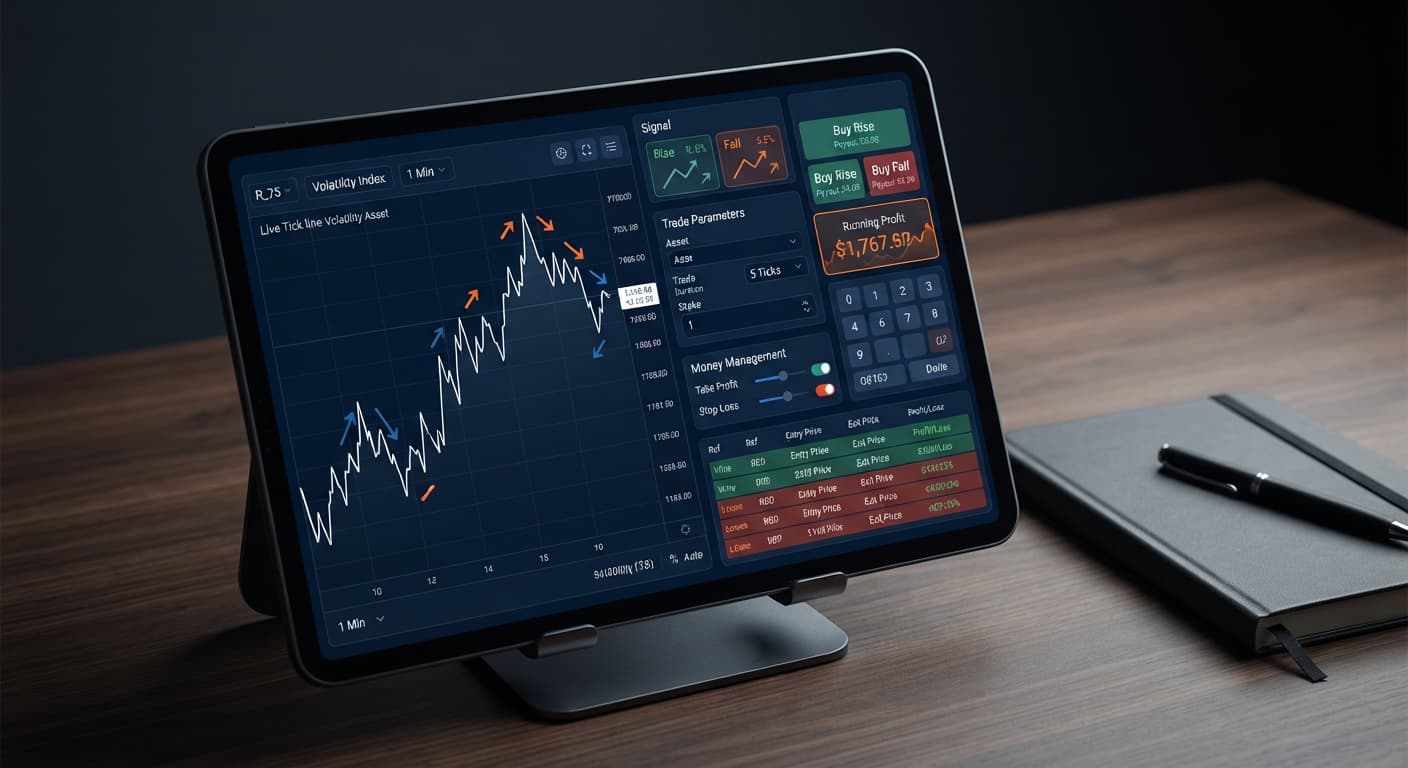
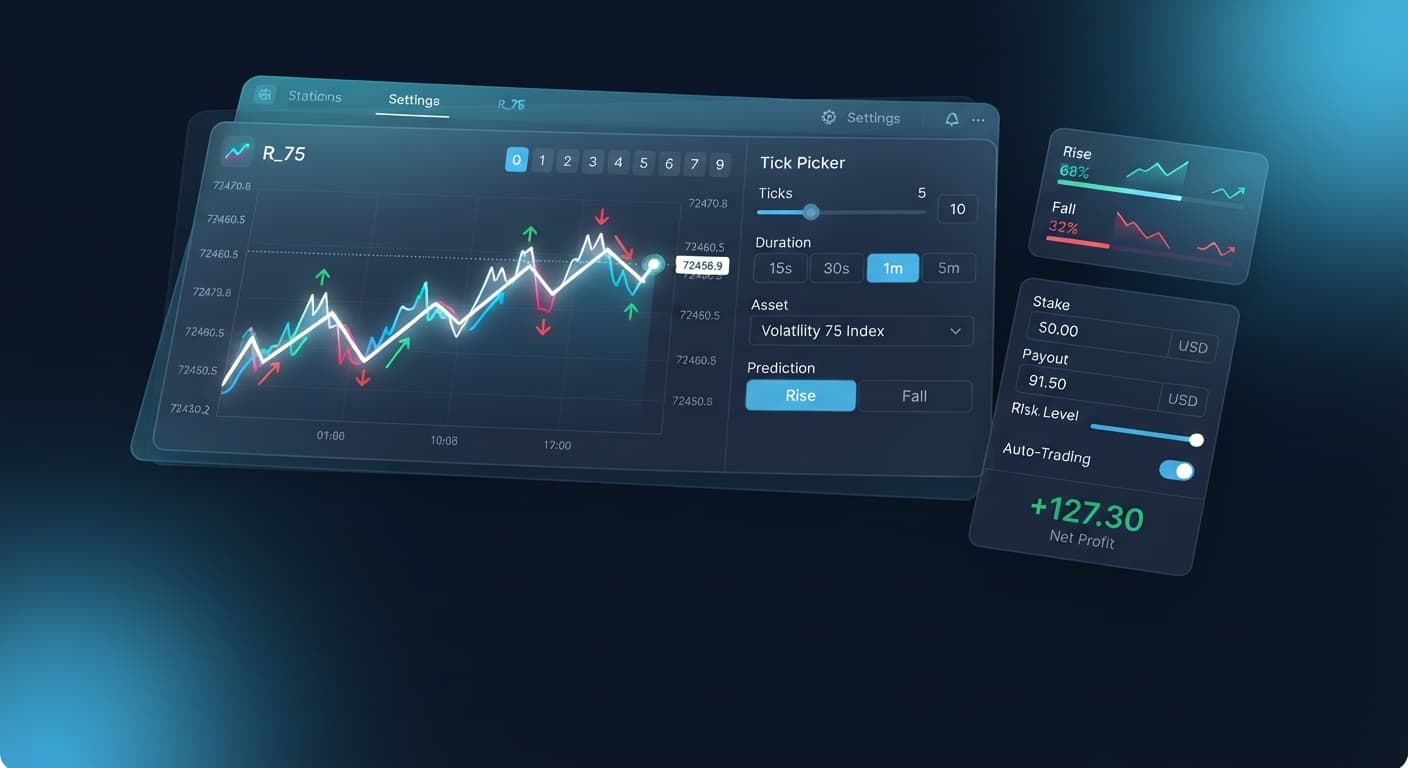
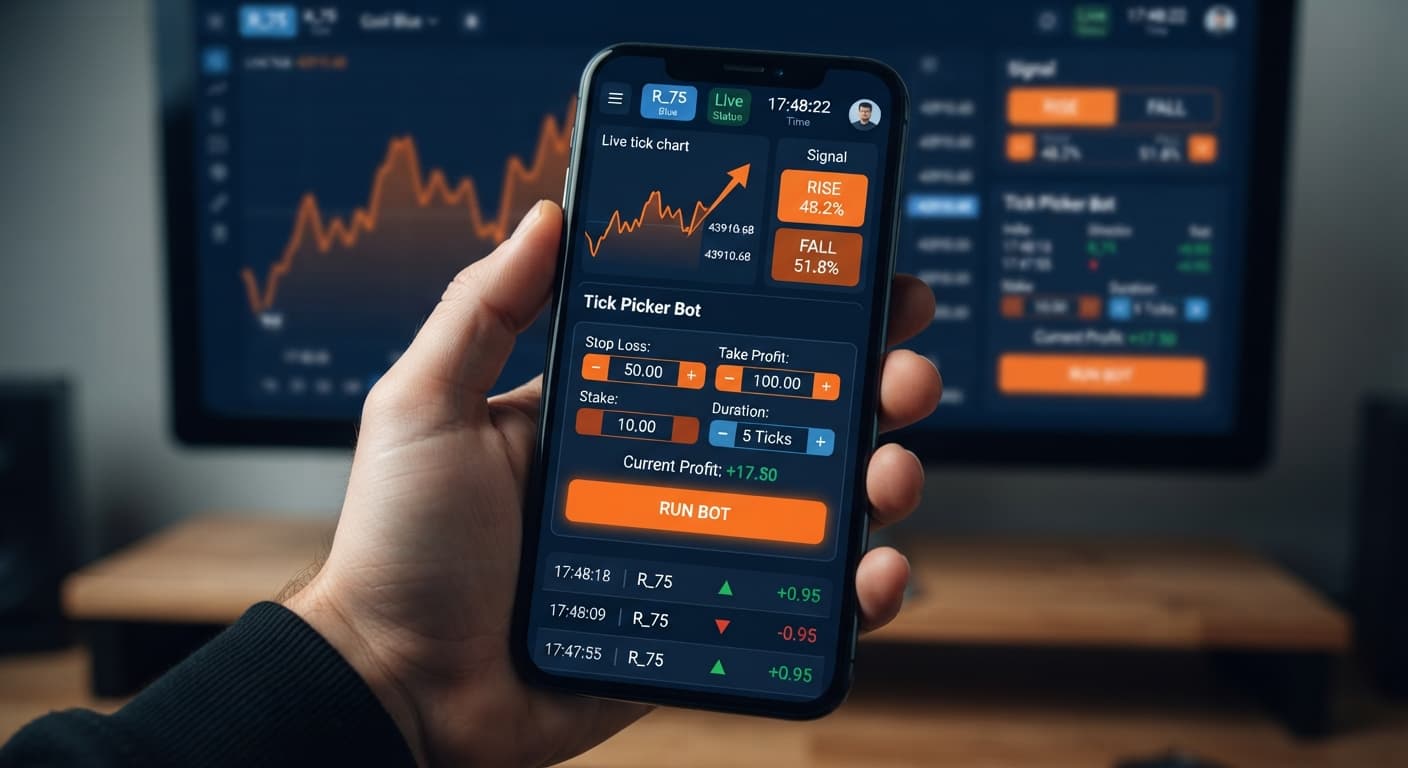
In a head-to-head battle of tick picker vs manual trading, the choice comes down to execution speed and emotional discipline versus discretionary visual control. Automated tools like Tick Picker process tick trends instantly and execute CALL or PUT contracts without hesitation, while manual trading leaves entry timing and money management subject to human fatigue. Neither method alters the random nature of Deriv synthetic index ticks, but using deriv bots removes the temptation to abandon your trading plan after a losing trade.
When evaluating tick picker vs manual trading on synthetic markets, execution speed makes a noticeable difference. On high-speed synthetic indices, a manual click can easily lag behind a fast tick move by half a second. Automation eliminates that latency while enforcing strict risk boundaries.
stop loss and target profit before starting your session.Here is how both execution methods compare across key operational dimensions on BinaryBot.live:
| Dimension | Tick Picker Execution | Manual Trading |
|---|---|---|
| Execution Speed | Sub-second WebSocket API contract placement | Manual click lag (200ms to 500ms delay) |
| Supported Contracts | CALL, PUT | CALL, PUT |
| Selectable Markets | Volatility indices, 1s volatility indices | Volatility indices, 1s volatility indices |
| Money Management Modes | Fixed Stake, Martingale, Mesamilano | Unstructured manual entry adjustments |
| Emotion Control | Strict automated enforcement of boundaries | High vulnerability to emotional tilt |
| Analysis Focus | Real-time tick charts and trend detection | Visual observation of individual ticks |
| Session Fatigue | Zero degradation in rule execution over time | Discipline degrades as fatigue sets in |
Let's look at how a real session unfolds when comparing a tick picker vs manual trading workflow in dollar terms.
Suppose you start with a $50 account balance on Volatility 100 Index. Your goal is to make $10 in profit or stop if you hit a $20 drawdown limit.
You open the Deriv trading terminal with a $2 base stake.
Frustration kicks in. You decide to break your rule and manually bump your stake to $6 to regain your loss in one trade.
In just five trades, emotional stake sizing dropped your balance by $14.10. Hesitation causes you to miss the next setup, and you leave the screen down $14.10.
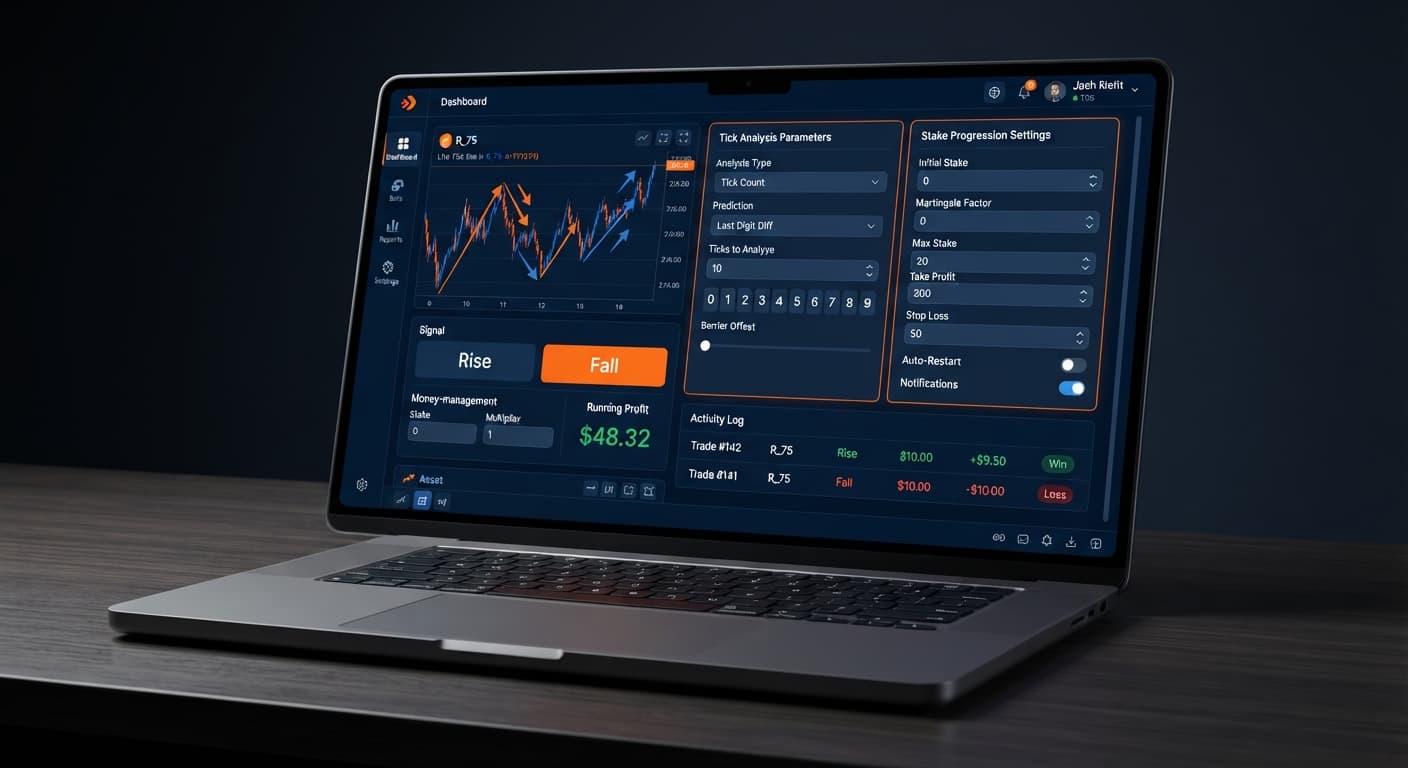
You launch the tool on the Tick Picker dashboard. You select Volatility 100 Index and set these exact parameters:
stake: $2money management mode: Martingalestop loss: $20target profit: $10Here is how the automated trading bot processes the sequence:
The bot hit the $target profit parameter and stopped automatically at $59.20.
The automated run reached its target, but don't ignore the hidden math.
On Trade 4, the bot placed an $8 stake. If Trade 4 had lost, your total losses for that run would have reached $14 ($2 + $4 + $8). The required next stake under Martingale would be $16.
Look at what happens if you suffer four consecutive losses with a $2 base stake using Martingale:
To place the fifth trade, you need a $32 stake. On a $50 starting balance, you only have $20 left. You are completely blocked from placing the recovery trade, wiping out 60% of your account balance in minutes. Martingale doubles faster than most traders anticipate.
If you want a less aggressive recovery progression, switch money management mode to Mesamilano. Mesamilano spreads loss recovery across several subsequent winning trades instead of doubling your stake immediately on the next trade.
Neither choice is flawless. Understanding where each method breaks down keeps your account alive.
Manual trading fails primarily because of physical latency and emotional drift.
On 1s volatility indices, ticks update every single second. By the time your eye registers a tick trend and your finger clicks the trade button, the price move may already be over. That delay leads to poor entry points on Rise/Fall contracts.
Revenge trading is the second major killer. When you trade manually, a string of losses triggers an urge to get back to even immediately. You abandon your planned stake size, ignore your session limits, and keep clicking until your balance hits zero.
Automated bots have weaknesses you cannot ignore.
First, automated signal engines follow rigid trend calculations. If the market moves into a noisy, sideways consolidation phase, the bot will continue placing CALL and PUT contracts into chop, triggering multiple rapid losses.
Second, past digit frequency or tick direction does not change the probability of the next tick draw. Deriv synthetic indices are independent random draws generated by cryptographic algorithms. Five consecutive falling ticks do not make a CALL trade more likely to win on the next tick.
Third, aggressive progression modes can destroy small balances. A free deriv bot follows your settings blindly. If you set Martingale without a reasonable stop loss, it will double stakes repeatedly until your bankroll is exhausted.
You don't need to choose one permanently. Experienced traders alternate between manual chart observation and automated execution depending on market conditions.
A solid workflow involves observing the real-time tick chart manually to determine if Volatility indices or 1s volatility indices are showing clear tick momentum. Once you verify that market conditions are trending smoothly rather than chopping sideways, you hand over execution to the bot.
Follow this checklist when moving from manual analysis to automated execution:
stake, stop loss, and target profit before clicking start.money management mode if you want to avoid steep Martingale drawdowns.stop loss or target profit limits.Combining manual observation with automated order placement gives you complete clarity on market conditions while enforcing strict money management rules.
Test your trading setup on a free virtual balance at Tick Picker on BinaryBot.live. If you need an account to get started, create a free Deriv account before running live trades.
Trading involves risk. Past performance does not guarantee future results.
Related: Why Your Tick Picker Is Not Working on Binary Bots
Related: How to Use Autopilot for Server-Side Deriv Automation
Related: Step-by-Step Guide to Configuring AutoPilot for Deriv
Related: Configuring Tick Picker Settings for Deriv Bots
Professional tick analysis tool for Deriv with real-time charts, trend detection and Rise/Fall trading signals, plus Mesamilano and Martingale strategies.
Open Tick Picker →Yes, Tick Picker uses sub-second WebSocket API contract placement to eliminate the 200ms to 500ms click lag that happens with manual trading on fast markets. This instant execution helps you avoid the entry delays common on high-speed synthetic indices.
Tick Picker removes the temptation to abandon your trading plan by strictly enforcing pre-set rules and risk boundaries. While manual traders often fall victim to emotional tilt and recklessly double their stakes after a loss, the bot maintains discipline without session fatigue.
Tick Picker applies structured loss recovery methods like Martingale and Mesamilano strictly by rules, alongside fixed stakes. You can also set exact parameters for your stop loss and target profit before starting your session, unlike unstructured manual adjustments.
Using Tick Picker doesn't change the random nature of Deriv synthetic index ticks. However, it does protect your workflow from human fatigue and hesitation while executing CALL and PUT contracts.
Guides closest to this one.
Compare Tick Picker vs Dualshot for automated trading on BinaryBot.live. Learn how fixed stake and recovery progression impact your strategy. Test free now.
Learn how to use tick picker for automated Rise/Fall trading on BinaryBot.live. Master free deriv bots with tick analysis. Start trading smarter today.
Master tick picker stop loss setup on BinaryBot.live. Learn to configure risk controls for automated deriv trading bot rise fall strategies today.